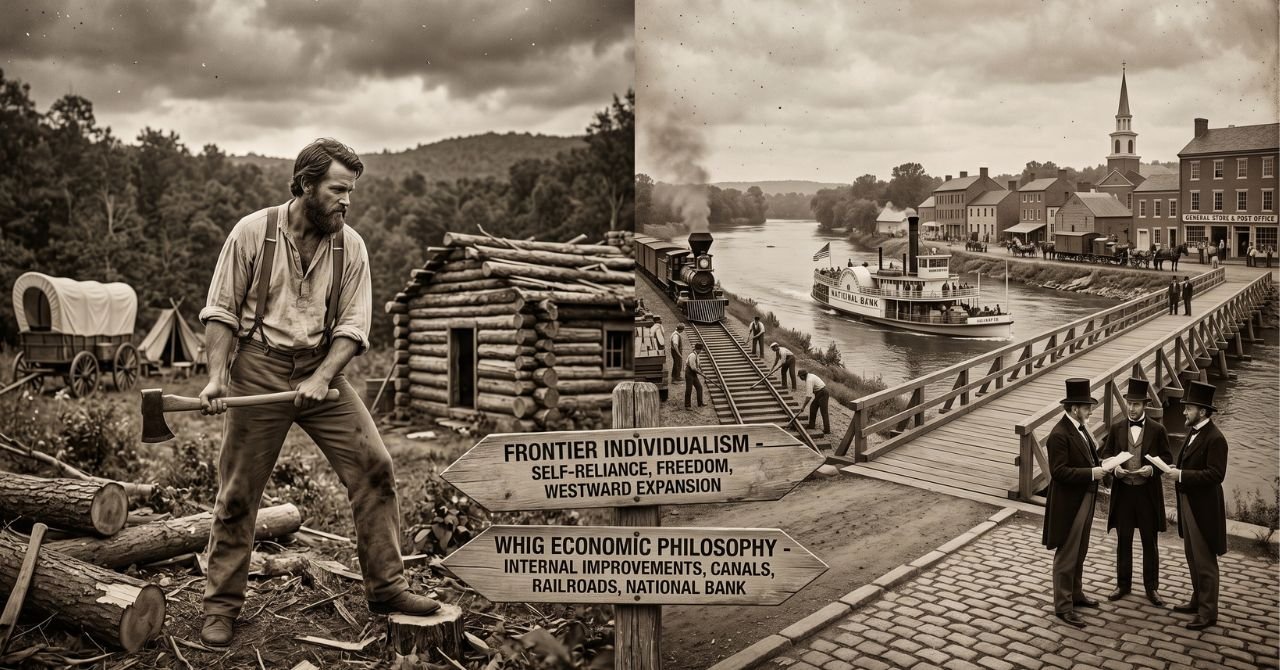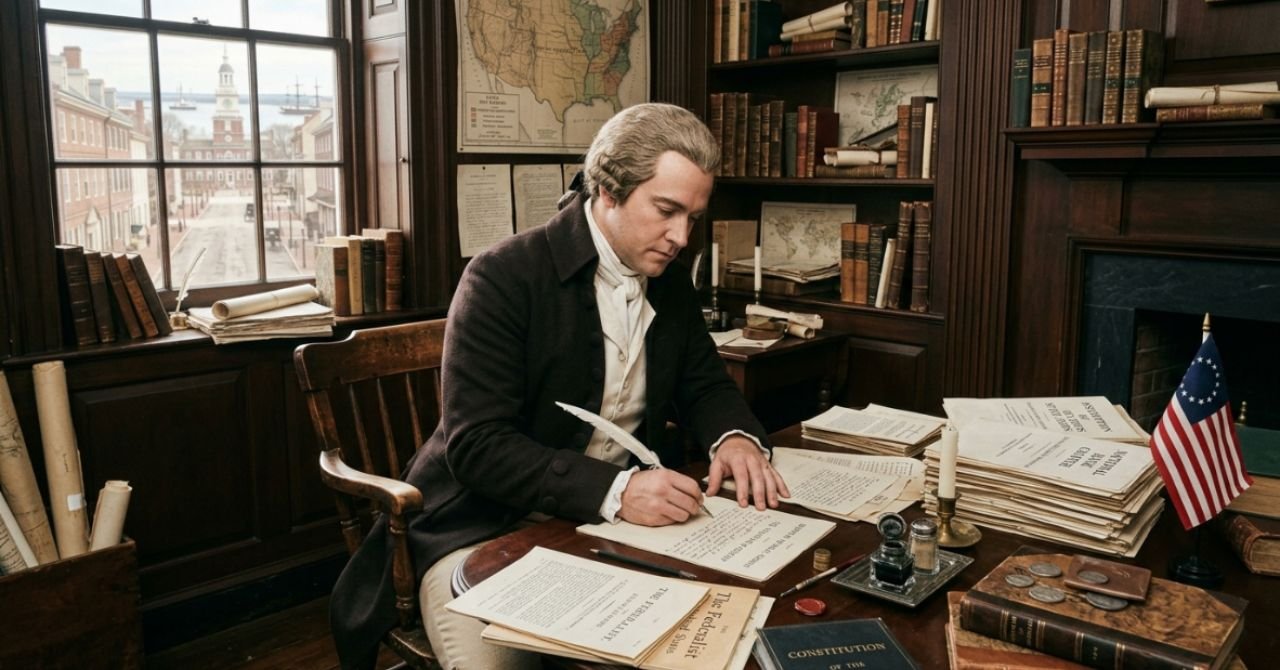
Alexander Hamilton stands as the primary architect of the financial, administrative, and constitutional machinery that transformed a fragile collection of newly independent agrarian states into a unified, modern industrial superpower. While popular culture often focuses on his dramatic life and political rivalries, an objective historical and institutional assessment reveals a visionary statesman who possessed a deep understanding of macroeconomic theory, state-building, and executive authority.
Hamilton did not merely participate in the founding of the United States; he engineered the structural foundation of its governance and economy. His work established the framework for a robust central state capable of projecting fiscal stability at home and commanding geopolitical respect abroad.
The Formative Years: Caribbean Merchant Capitalism and Military Bureaucracy
Hamilton’s strategic vision was fundamentally shaped by his early life in the West Indies and his subsequent military career during the American Revolutionary War. Born on the Caribbean island of Nevis and raised in Christiansted, St. Croix, Hamilton was exposed early to the complex, globalized networks of Atlantic trade. Managing a merchant shipping firm, Beekman and Cruger, at a young age, he developed an advanced, practical understanding of international commerce, currency exchange, accounting methods, and supply chain logistics.
[Atlantic Trade Networks] ──► [Practical Financial Literacy] ──► [Hamiltonian Economic Theory]
This foundational experience differentiated Hamilton from the typical Virginia planter elite, whose economic worldview was anchored in static, agrarian land ownership. Hamilton viewed wealth through a dynamic lens: as liquid capital, credit facilities, and commercial velocity.
His migration to New York in 1772 to study at King’s College (now Columbia University) quickly transitioned into active participation in the revolutionary movement. As George Washington’s aide-de-camp during the Revolutionary War, Hamilton spent four years managing the complex bureaucratic, financial, and logistical correspondence of the Continental Army.
This exposure to the crippling inefficiencies of the Continental Congress—which lacked the power to tax, stabilize currency, or guarantee supplies—instilled in him a lifelong skepticism of decentralized confederations. He concluded that an effective republic required a strong centralized executive and an unshakeable national credit structure to survive in a hostile global arena.
The Flaws of the Confederation and the Constitutional Blueprint
Following the war, Hamilton observed that the United States was rapidly disintegrating under the Articles of Confederation. The central government lacked the structural authority to levy domestic taxes, enforce international treaties, or regulate commerce between states. This structural weakness led to economic paralysis and civil unrest, such as Shays’ Rebellion in Massachusetts.
Hamilton became a leading force for constitutional reform. He served as a principal delegate to the Annapolis Convention of 1786 and the subsequent Constitutional Convention of 1787 in Philadelphia. To build intellectual and popular support for the new U.S. Constitution, Hamilton initiated and co-authored The Federalist Papers alongside James Madison and John Jay under the collective pseudonym “Publius.”
                         [The Federalist Papers Architecture]
                                          │
         ┌────────────────────────────────┼────────────────────────────────┐
         ▼                                ▼                                ▼
  Federalist No. 15                Federalist No. 23                Federalist No. 78
(The Inefficiencies of the     (The Unlimited Scope of Core     (The Judicial Branch and the
 Articles of Confederation)      National Defense Powers)         Doctrine of Judicial Review)
The Analytical Framework of the Federalist Papers
Hamilton authored 51 of the 85 essays, creating a definitive treatise on American constitutional interpretation and statecraft:
-
Federalist No. 15: Hamilton systematically analyzed the inefficiencies of the Articles of Confederation. He argued that government must be capable of enforcing its laws directly upon individual citizens, rather than relying on the voluntary compliance of sovereign states.
-
Federalist No. 23: He articulated the concept that the federal government’s authority must be equal to its responsibilities. In matters of national defense and public safety, he asserted that the central power should have no constitutional limitations, as the emergencies of nations cannot be completely foreseen.
-
Federalist No. 78: Hamilton laid the structural foundation for the American judicial branch, describing it as the “least dangerous branch” because it possessed neither the sword nor the purse. Crucially, he established the early doctrine of judicial review, arguing that federal courts have the explicit duty to declare unconstitutional any legislative acts that conflict with the supreme law of the land.
The Treasury Reports: Engineering the Financial Infrastructure
Appointed by George Washington as the nation’s first Secretary of the Treasury in September 1789, Hamilton confronted a massive fiscal crisis. The United States carried an enormous national and state debt of over $70 million, its currency was worthless, and its public credit was virtually destroyed on international markets.
Between 1790 and 1791, Hamilton submitted a series of comprehensive economic blueprints to Congress. Together, these reports served as the foundation for the American capitalist system.
                    [Hamiltonian Fiscal Architecture]
                                   │
         ┌─────────────────────────┼─────────────────────────┐
         ▼                         ▼                         ▼
   Report on Public         Report on a National       Report on
     Credit (1790)              Bank (1790)        Manufactures (1791)
1. Report on Public Credit (January 1790)
Hamilton proposed a controversial policy: the federal assumption of all outstanding state war debts and the funding of the combined national debt at face value. Rather than paying off the debt immediately, Hamilton intended to restructure it into secure government bonds that paid reliable interest.
His strategy was brilliantly dual-purposed:
-
Establishing Global Credibility: By guaranteeing that the United States would honor its financial obligations, he restored the nation’s credit rating, allowing the country to borrow capital from European markets at competitive interest rates.
-
Binding Wealthy Elites to the State: By converting old debts into federal bonds held by wealthy investors, he ensured that the economic elite had a direct financial stake in the stability and survival of the federal government.
This policy faced fierce resistance from Southern leaders like Thomas Jefferson and James Madison, whose states had largely paid off their debts and feared federal overreach. The resulting political logjam was resolved through the Compromise of 1790. In exchange for passage of the assumption bill, Hamilton agreed to support the permanent relocation of the national capital to a Southern site along the Potomac River (Washington, D.C.).
2. Report on a National Bank (December 1790)
To manage the nation’s newly stabilized finances, Hamilton proposed the creation of the Bank of the United States. Modeled on the Bank of England, this institution was designed as a public-private joint-stock corporation.
The National Bank served several crucial macroeconomic functions:
-
It provided a secure repository for federal tax collections.
-
It acted as the fiscal agent for the federal government, transferring funds efficiently across state lines.
-
It issued a uniform paper currency backed by gold and silver specie, resolving the chronic currency shortage that paralyzed local trade.
-
It extended commercial credit to private businesses, stimulating investment, manufacturing, and trade.
The constitutional debate over the bank led to the formation of the first political parties. Jefferson argued for a strict construction of the Constitution, noting that Article I did not explicitly authorize Congress to charter a bank.
Hamilton countered with the doctrine of implied powers under Article I, Section 8’s “Necessary and Proper Clause.” He argued that because the government had the explicit right to collect taxes, regulate commerce, and borrow money, it possessed the implied authority to create the institutional tools necessary to execute those responsibilities. President Washington accepted Hamilton’s argument, establishing a flexible constitutional precedent that allowed the federal government to adapt to changing economic realities over time.
3. Report on Manufactures (December 1791)
In his final report, Hamilton delivered a visionary critique of Adam Smith’s pure laissez-faire economics and Thomas Jefferson’s vision of an agrarian republic. Hamilton recognized that a nation relying solely on agricultural exports would remain economically dependent on industrial European powers.
He outlined a comprehensive state-guided industrial policy designed to build a self-sufficient domestic economy through:
-
Protective Tariffs: Imposing duties on imported manufactured goods to shield young American industries from foreign competition.
-
Bounties and Subsidies: Providing direct federal financial incentives to entrepreneurs who introduced new technologies or scaled production in vital sectors like textiles, iron, and munitions.
-
Infrastructure Investment: Funding internal improvements to facilitate the rapid movement of raw materials and finished products across regions.
Although Congress initially rejected the aggressive industrial incentives in the report, Hamilton’s core ideas became the strategic foundation for the American System of economics in the 19th century, accelerating the nation’s industrial revolution.
Institutional Comparisons: Two Visions for America
The structural clash between Hamilton’s commercial nationalism and Jefferson’s agrarian democracy defined the early American political environment. This intellectual division formed the basis of the First Party System, pitting the Federalists against the Democratic-Republicans.
| Macroeconomic and Political Dimensions | Alexander Hamilton (Federalist Vision) | Thomas Jefferson (Democratic-Republican Vision) |
| Core Economic Sector | Industrial manufacturing, commercial banking, and maritime trade. | Agrarian farming and local plantation economics. |
| Constitutional Interpretation | Broad / Loose constructionism; emphasis on implied powers. | Strict / Narrow constructionism; emphasis on the Tenth Amendment. |
| Geopolitical Orientation | Pro-British; prioritized commercial ties with the dominant global financial empire. | Pro-French; embraced the ideological rhetoric of the French Revolution. |
| Locus of Sovereignty | Strong central government with a dominant executive branch. | Decentralized state governments with local community control. |
Executive Authority and Judicial Legacy: The Foundations of the Modern State
Hamilton’s impact extends far beyond fiscal policy. As an influential cabinet member and trusted advisor to George Washington, he played a critical role in establishing executive authority and institutional stability during periods of crisis.
The Whiskey Rebellion of 1794
When western Pennsylvania farmers launched an armed revolt against the federal excise tax on distilled spirits, Hamilton viewed the insurrection as an existential threat to the constitutional order. He accompanied President Washington and an army of 13,000 militia forces into the field to suppress the rebellion.
The bloodless dispersion of the insurgents demonstrated that the federal government possessed the administrative and military capacity to enforce its revenue laws within sovereign states, marking a sharp contrast to the failures of the Articles of Confederation.
[Armed Civil Insurrection] ──► [Decisive Federal Force Deployment] ──► [Validation of Rule of Law]
Shaping the American Judicial System
Hamilton’s legal theories also transformed American jurisprudence through his influence on his close friend and ideological ally, Chief Justice John Marshall.
The landmark Supreme Court decision in McCulloch v. Maryland (1819) directly adopted Hamilton’s 1791 legal defense of the National Bank. Marshall verified that the Constitution grants Congress implied powers to create a bank, using language that closely tracked Hamilton’s original brief to Washington. Similarly, Marbury v. Madison (1803) institutionalized the concept of judicial review that Hamilton had outlined in Federalist No. 78.
Institutional Evolution: Building Global Systems
Hamilton’s administrative blueprint also included the establishment of durable public institutions designed to secure the nation’s borders and fiscal streams. In 1790, he pushed for the creation of the Revenue Marine (now the United States Coast Guard), a fleet of armed cutters tasked with patrolling American waters to suppress smuggling, protect maritime commerce, and enforce tariff collections.
[Establishment of Revenue Marine] ──► [Tariff Enforcement & Counter-Smuggling] ──► [Secured Federal Revenue]
To stabilize domestic business transactions, Hamilton drafted the legislation establishing the United States Mint in 1792. He introduced a decimal currency system and a bimetallic standard that standardized the country’s currency, replacing the confusing mix of foreign coins that disrupted internal trade.
He also co-founded the Society for Establishing Useful Manufactures (S.U.M.) in Paterson, New Jersey, using the Great Falls of the Passaic River to power early industrial factories. This venture served as a working laboratory for the large-scale production models detailed in his economic reports, proving that the United States could compete directly with European manufacturing.
The Ultimate Sacrifice and Enduring Historical Relevance
Hamilton’s political career ended prematurely on July 11, 1804, following his fatal duel with Vice President Aaron Burr in Weehawken, New Jersey. The conflict was the culmination of a long-standing political and personal rivalry, fueled by Hamilton’s public opposition to Burr during the tied presidential election of 1800 and the New York gubernatorial race of 1804.
[Deep Political & Ideological Clashes] ──► [The Weehawken Duel (1804)] ──► [Martyrdom of the Architect]
Though his life was cut short, the structural foundations Hamilton engineered proved indestructible. When the United States faced existential crises—including the Civil War and the Great Depression—the nation relied heavily on the central fiscal powers and broad constitutional interpretations that Hamilton had established.
Hamilton inherited a weak, bankrupt confederation on the edge of collapse. Through deep political pragmatism, structural vision, and administrative skill, he forged a unified federal state capable of protecting its domestic markets, stabilizing its currency, and building a global economic empire. Modern America—defined by its industrial capability, financial markets, and strong executive governance—remains a fundamentally Hamiltonian republic.
Comprehensive Reference Resources
To conduct deep research and verify historical documentation regarding Alexander Hamilton’s life, political career, and economic legacy, consult the following authoritative digital archives and institutional collections:
-
The Papers of Alexander Hamilton Digital Edition: Curated by the Columbia University Press, this archive contains the definitive, fully annotated collection of Hamilton’s complete personal and professional correspondence, legal briefs, and major state reports.
-
The Library of Congress Digital Collections: The Alexander Hamilton Papers at the Library of Congress provides high-resolution access to original historical manuscripts, draft versions of The Federalist Papers, and intimate political correspondence.
-
The National Archives and Records Administration (NARA): Access the foundational institutional records of the early American republic, including the original text of Hamilton’s Treasury reports and presidential correspondence via the Founders Online database.
-
The Gilder Lehrman Institute of American History: Offers specialized educational collections, analytical essays, and transcriptions of unique primary documents focusing on Hamilton’s financial strategy and military career within the Gilder Lehrman Collection.