The twentieth century was defined by tectonic geopolitical shifts, yet few individuals reshaped the moral landscape of global history as profoundly as Nelson Rolihlahla Mandela. Known affectionately by his traditional clan name, Madiba, Mandela transcended his role as a political revolutionary to become a universal symbol of human rights, resilience, and systemic transformation. His journey from a rural village in the Eastern Cape to the presidency of a democratic South Africa provides an enduring framework for understanding how structural oppression can be dismantled through strategic resistance and unyielding ethical leadership.
Understanding his impact requires examining the complex layers of his life: his early foundational years, his transition into a revolutionary strategist, the profound isolation and hidden diplomacy of his twenty-seven years of imprisonment, and his ultimate emergence as a unifying statesman. His legacy is not merely historical text; it is a living blueprint for reconciliation, social justice, and institutional change that continues to inform global leadership and human rights movements today.
Early Foundations: The Making of a Leader
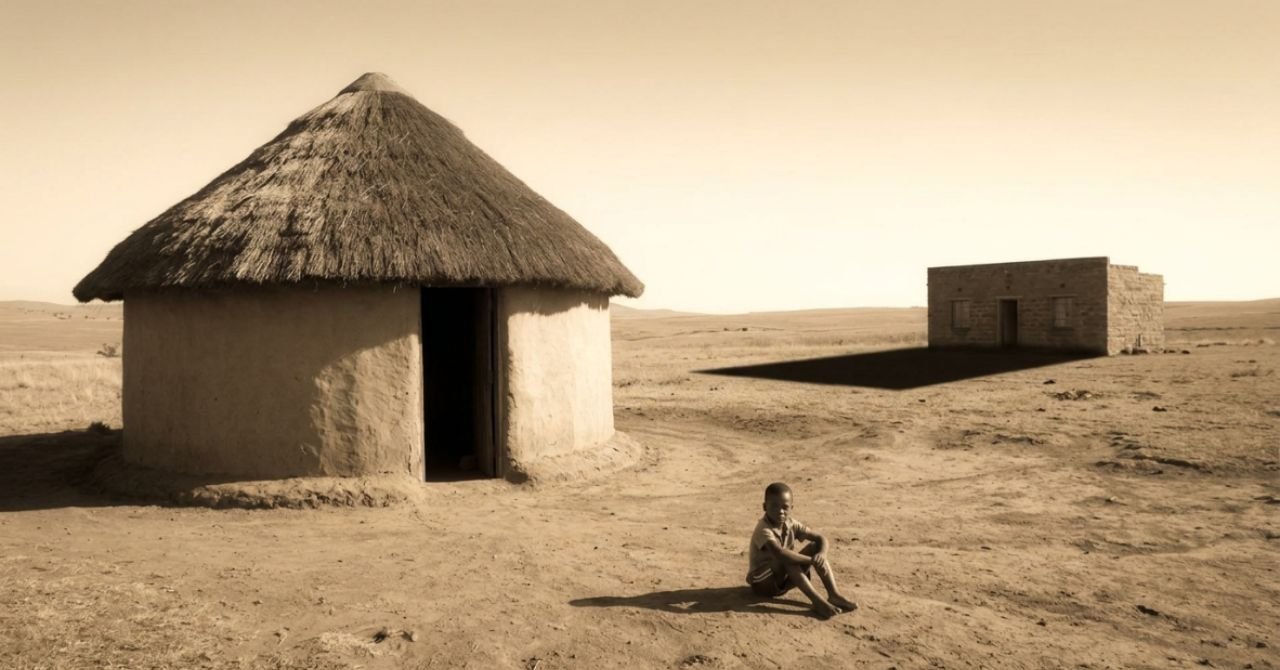
Nelson Mandela was born on July 18, 1918, in the tiny village of Mvezo, situated along the banks of the Mbashe River in the Transkei region of South Africa’s Eastern Cape. His father, Gadla Henry Mphakanyiswa, served as a principal counselor to the acting king of the Thembu people. Following his father’s passing when Mandela was just a child, he was adopted by the regent, Jongintaba Dalindyebo, and raised at the Great Place at Mqhekezweni. Detailed geographic and historical records of this region are preserved within the South African History Online repository.
This traditional upbringing profoundly shaped his character and perspective on governance:
-
The Custom of Consensus: At the royal court, Mandela observed traditional tribal meetings (imbizos), where every member of the community was permitted to speak. The regent would listen in absolute silence for hours before synthesizing the collective wisdom of the room. This early exposure instilled a deep belief in consensus-driven leadership—a trait that would later define his negotiations with adversaries.
-
Academic Discipline: Recognizing the shifting realities of colonial South Africa, his guardians prioritized formal Western education alongside traditional teachings. Mandela attended Clarkebury Boarding Institute and later Healdtown, a Methodist secondary school, where he excelled in academics, boxing, and long-distance running.
-
The Pursuit of Law: In 1939, Mandela entered the University of Fort Hare, the premier institution of higher learning for Black Africans at the time. It was here that he met lifelong intellectual allies, including Oliver Tambo. After a student protest led to his suspension, Mandela fled the Eastern Cape to avoid an arranged marriage, arriving in the bustling, racially divided metropolis of Johannesburg in 1941.
Johannesburg acted as a crucible. Confronted by the stark, everyday realities of urban segregation and poverty, the young law student quickly realized that academic success alone could not shield an African from structural disenfranchisement. He completed his Bachelor of Arts degree via correspondence through the University of South Africa and enrolled at the University of the Witwatersrand to pursue a Bachelor of Laws degree, where he was the only Black African student in the faculty. His early academic struggles and achievements are thoroughly documented in the biographical records maintained by the Nelson Mandela Foundation.
The Rise of Resistance: From Legal Defense to Revolutionary Strategy
By the mid-1940s, the political climate in South Africa was rapidly deteriorating. In 1948, the National Party secured power on a platform explicitly dedicated to institutionalizing apartheid—an Afrikaner nationalism-driven system of total racial segregation designed to maintain white minority rule. A detailed breakdown of these legislative frameworks can be explored through the Encyclopedia Britannica Apartheid Records.
The Youth League Catalyst
In response to the increasingly rigid laws, Mandela, along with brilliant contemporaries like Anton Lembede, Walter Sisulu, and Oliver Tambo, infused new energy into the African National Congress (ANC). They believed the old guard’s methods of polite petitions and formal letters to the colonial government were obsolete.
In 1944, they founded the ANC Youth League (ANCYL), advocating for a radical change in strategy. The ANCYL’s 1949 Programme of Action shifted the organization toward mass civil disobedience, boycotts, strikes, and non-violent non-cooperation. The complete ideological evolution of this movement is detailed in the Stanford University King Institute Liberation Archives.
Defiance and the Legal Frontier
In 1952, Mandela was appointed the National Volunteer-in-Chief of the Defiance Campaign. This initiative encouraged deliberate, peaceful violations of unjust apartheid laws, such as entering whites-only spaces and defying curfew orders. The campaign resulted in thousands of arrests, catapulting the ANC into a massive popular movement and establishing Mandela as a premier national leader.
Simultaneously, Mandela and Oliver Tambo opened Mandela & Tambo in Johannesburg, the first Black-owned legal practice in South Africa. The firm provided affordable, often free, legal counsel to ordinary citizens ensnared by the predatory pass laws, group areas acts, and labor exploitation. This practical, day-to-day work gave Mandela an intimate understanding of the devastating impact institutional discrimination had on families and communities.
The Turning Point: Umkhonto we Sizwe
The state responded to peaceful protests with escalating violence. The watershed moment arrived on March 21, 1960, when police opened fire on peaceful demonstrators in Sharpeville, killing 69 people—most of them shot in the back. The government declared a state of emergency and banned the ANC. The global impact of this event is archived in the United Nations Sharpeville Historical Files.
Faced with a state that met peaceful petition with absolute violence, Mandela underwent a profound strategic shift. He concluded that non-violence was a tactic, not an unalterable moral principle. In late 1961, Mandela co-founded Umkhonto we Sizwe (“Spear of the Nation,” or MK), the armed wing of the ANC. As its first commander-in-chief, he traveled secretly across Africa and Europe to secure financial support, political backing, and military training for guerilla warfare, focusing strictly on sabotaging state infrastructure rather than targeting human life.
The Rivonia Trial and the Power of the Uncompromising Word
Mandela’s underground operations earned him the nickname “The Black Pimpernel” from the press due to his ability to evade capture by disguising himself as a chauffeur, chef, or laborer. However, on August 5, 1962, his run ended when police intercepted his vehicle near Howick in Natal. He was initially sentenced to five years for incitement and leaving the country without a passport.
While serving this sentence, state authorities raided an MK safehouse in Rivonia, uncovering detailed documents outlining plans for guerrilla operations. Mandela and several top resistance leaders—including Walter Sisulu, Govan Mbeki, and Denis Goldberg—were put on trial for sabotage and conspiracy to overthrow the government. The state actively sought the death penalty.
The Rivonia Trial (1963–1964) became an international focal point. Instead of offering a standard legal defense, Mandela used the courtroom as a political platform. On April 20, 1964, he delivered his historic three-hour opening statement from the dock, articulating the systemic grievances of Black South Africans and outlining the vision for a democratic future. The complete, unedited transcripts of this testimony are preserved by the University of the Witwatersrand Historical Papers. His concluding words reverberated globally:
“I have fought against white domination, and I have fought against black domination. I have cherished the ideal of a democratic and free society in which all persons live together in harmony and with equal opportunities. It is an ideal which I hope to live for and to achieve. But if needs be, it is an ideal for which I am prepared to die.”
On June 12, 1964, the judge spared the defendants the gallows, sentencing Mandela and his co-accused to life imprisonment.
Captivity as a Crucible: The Robben Island Years
Mandela was dispatched to Robben Island, a desolate, wind-swept limestone outcrop located several miles off the coast of Cape Town. He spent eighteen of his twenty-seven years of imprisonment on this isolated island, subjected to harsh physical labor and psychological isolation.
The Daily Reality
Political prisoners were kept separate from common-law criminals and subjected to the strictest regulations. Mandela’s cell measured just seven by eight feet, furnished only with a straw mat and a bucket. Forced to labor daily in a blindingly white limestone quarry, the glare permanently damaged his tear ducts and lungs. Communication with the outside world was severely restricted; he was permitted only one letter and one half-hour visit every six months, with correspondence heavily censored by prison authorities.
The University of Robben Island
Despite these oppressive conditions, Mandela and his colleagues transformed the prison into an intellectual center, affectionately termed “The University of Robben Island.” Senior political prisoners organized structured educational seminars for younger inmates. Mandela studied Afrikaans—the language of his oppressors—and delved deeply into Afrikaner history, literature, and poetry.
He understood that to defeat or negotiate effectively with an adversary, one must first comprehend their worldview, fears, and cultural identity. His ability to converse with prison wardens in their native language altered the power dynamics within the prison walls, shifting relations from brutal subjugation to mutual respect. The preservation of these prison logs and personal reflections can be found at the Robben Island Museum Archive.
Shifting Dynamics and Global Pressure
As the decades progressed, the internal contradictions of the apartheid state became unsustainable. Mass resistance erupted domestically, led by the United Democratic Front and the Black Consciousness Movement, while international anti-apartheid movements isolated South Africa economically, culturally, and recreationally.
By the mid-1980s, global campaigns focused intensely on a singular, unifying demand: Release Nelson Mandela. Recognizing that military victory was impossible for either side, Mandela initiated highly confidential, exploratory discussions with representatives of the apartheid government from his prison cell, setting the stage for a negotiated settlement.
Transitional Statesmanship: Negotiating the Democratic Miracle
In 1988, Mandela was moved to Victor Verster Prison near Paarl, where the final, official phases of negotiations accelerated. On February 2, 1990, State President F.W. de Klerk made the historic announcement lifting the ban on the ANC and other liberation movements.
On February 11, 1990, after 10,000 days of captivity, Nelson Mandela walked out of Victor Verster Prison a free man, greeted by cheering crowds and broadcast live to millions around the world. The historic television footage and global reactions are documented by the BBC World Service Historic Archives.
The four years between his release and South Africa’s first democratic election were marked by severe volatility. The country verged on civil war, fueled by right-wing resistance, state-sponsored covert violence, and bloody clashes between rival political factions.
Mandela’s leadership during this crisis was defined by a remarkable balance of strategic flexibility and absolute principle:
-
The Assassination of Chris Hani: In April 1993, the charismatic liberation leader Chris Hani was assassinated by a white supremacist, pushing the country to the brink of an uprising. Mandela bypassed the sitting president and addressed the nation on television, delivering a calm, authoritative appeal for peace that successfully averted widespread conflict.
-
The CODESA Framework: Through the Convention for a Democratic South Africa (CODESA), Mandela led the ANC team in complex negotiations to establish an interim constitution, ensuring the protection of minority rights without compromising the core democratic principle of majority rule. The full legal texts of these constitutional drafts are hosted by the University of Cape Town Law Library.
-
The Nobel Peace Prize: In recognition of their peaceful efforts to dismantle the apartheid apparatus, Nelson Mandela and F.W. de Klerk were jointly awarded the Nobel Peace Prize in 1993. The official presentation speeches and citations are detailed on the Nobel Prize Official Archive.
On April 27, 1994, South Africa held its first fully representative, non-racial democratic election. Images of millions of citizens of all races standing in long, winding queues to cast their ballots came to symbolize the birth of what Archbishop Desmond Tutu famously named the “Rainbow Nation.” On May 10, 1994, Nelson Mandela was inaugurated as South Africa’s first Black president.
The Presidency: Healing an Injured Nation
Mandela’s presidency (1994–1999) prioritized nation-building and national reconciliation over political retribution. He recognized that a country fractured by centuries of systemic racism could not survive on economic reconstruction alone; it required collective psychological healing.
Institutionalizing Truth: The TRC
Rather than pursuing retributive justice through Nuremberg-style trials or letting atrocities pass unrecognized, Mandela’s government established the Truth and Reconciliation Commission (TRC), chaired by Archbishop Desmond Tutu.
The TRC allowed victims of politically motivated human rights violations to share their stories publicly, while perpetrators could apply for amnesty in exchange for full, transparent disclosure of their crimes. The complete multi-volume report detailing these testimonies can be downloaded via the South African Department of Justice TRC Portal. While controversial, the TRC provided a valuable mechanism for uncovering historical truths and establishing a shared national narrative.
Symbolic Leadership: The 1995 Rugby World Cup
One of the most iconic moments of Mandela’s presidency occurred during the 1995 Rugby World Cup, hosted by South Africa. Rugby had long been viewed by Black South Africans as a symbol of Afrikaner white supremacy.
Instead of sidelining the sport, Mandela embraced the national team, the Springboks. Clad in the green-and-gold Springbok jersey—previously a hated symbol of oppression—Mandela walked onto the field at Ellis Park to a thunderous chant of “Nelson! Nelson!” from a predominantly white crowd. This singular act of cultural empathy powerfully reassured white South Africans that they had a secure place in the new democracy.
Comparative Assessment: Perspectives on Transitional Justice
Evaluating Mandela’s historical legacy requires analyzing the unique approach South Africa took toward transitional justice compared to other post-conflict societies. Academic studies regarding these models are published in detail by the Harvard Human Rights Journal.
| Dimension of Transition | South Africa’s Model (The Mandela Era) | Alternative Post-Conflict Models | Strategic Outcomes |
| Judicial Approach | Restorative Justice: Conditional amnesty granted via public confession and truth-telling through the TRC framework. | Retributive Justice: Formal prosecution and military tribunals for human rights violations (e.g., Post-WWII Europe). | Avoided a destructive civil war; prioritized national stability and social cohesion over retribution. |
| Socio-Economic Transition | Institutional Continuity: Maintained existing market systems while introducing gradual Black Economic Empowerment (BEE) programs. | Radical Redistribution: Immediate, state-enforced seizure of private land and corporate assets (e.g., Post-Colonial Zimbabwe). | Preserved critical macroeconomic stability but left deep structural wealth inequality unresolved. |
| Political Integration | Consensus & Power-Sharing: Established a temporary Government of National Unity incorporating former opposition leaders. | Majoritarian Dominance: Total political exclusion of the defeated ruling minority or regime remnants. | Successfully prevented white flight and institutional collapse during the fragile transition. |
Global Impact, Retirement, and Intellectual Legacy
Adhering strictly to his constitutional principles, Mandela chose not to seek a second term, stepping down from the presidency in 1999 in favor of Thabo Mbeki. This decision set a vital democratic precedent for the African continent, where many liberation leaders routinely extended their rule indefinitely. The international geopolitical impact of this transition is regularly analyzed by the Council on Foreign Relations.
In retirement, Mandela remained a global ambassador for human rights and public health through the Nelson Mandela Foundation. He established the Elders, an independent collective of global leaders working together for peace and human rights. He became a prominent advocate in the fight against HIV/AIDS, breaking deep cultural taboos by speaking openly about the disease after it claimed the life of his son, Makgatho.
Nelson Mandela passed away on December 5, 2013, at the age of 95, surrounded by his family at his home in Houghton, Johannesburg. His death prompted a period of global mourning, drawing presidents, prime ministers, and citizens from every corner of the world to celebrate a life fully dedicated to human freedom. The global institutional honors are recorded in the UNESCO Memory of the World Register.
Today, his legacy serves as a profound reminder that true liberation requires more than just defeating an oppressor; it demands building a society rooted in dignity, mutual respect, and equality. His life proved that leadership is not defined by personal grievance, but by an enduring commitment to the collective progress of humanity.
Verifiable Primary Sources and Institutional Archives
For researchers, students, and historians seeking to explore the primary records of this era, the following institutions host the authoritative digital and physical collections of Nelson Mandela’s life and work:
-
The Nelson Mandela Foundation (Johannesburg, South Africa): The official repository housing Madiba’s personal archives, private papers, prison notebooks, and draft manuscripts. Comprehensive digitized exhibits are accessible through the Nelson Mandela Centre of Memory.
-
The Robben Island Museum (Cape Town, South Africa): A UNESCO World Heritage site that preserves the prison infrastructure, individual cell records, and oral histories of political prisoners. Digital educational resources are available at the Robben Island Museum Archive.
-
The South African History Online (SAHO): A comprehensive non-profit historical database tracking the anti-apartheid liberation struggle, containing primary source documents, trial transcripts, and biographical registries accessible via South African History Online.
Core Historical Subtitles and Definitive Reference Metadata
Key Chronological Subtitles
-
1918–1940: Tribal Roots, Consensus Leadership Foundations, and the Great Place at Mqhekezweni
-
1941–1947: The Witwatersrand Crucible and the Intellectual Genesis of the Youth League
-
1948–1959: Institutional Apartheid, Legal Defense Practice, and the Defiance Campaign
-
1960–1963: The Sharpeville Watershed, Underground Operations, and the Birth of Umkhonto we Sizwe
-
1964–1982: The Rivonia Trial Defense, Limestone Quarry Labor, and the Robben Island University
-
1983–1990: Pollsmoor and Victor Verster Diplomacy, Global Sanctions, and the Walk to Freedom
-
1991–1994: CODESA Constitutional Negotiations, the Hani Crisis, and the Democratic Election
-
1995–1999: The Rainbow Nation Presidency, the Truth and Reconciliation Commission, and Cultural Empathy
-
2000–2013: Global Humanitarian Advocacy, the Elders Initiative, and an Enduring Moral Legacy