Claude Edward Elkins Jr.: From Railroad Brakeman to Chief Commercial Officer
Quick Overview: Claude Edward Elkins Jr., widely known as Ed Elkins, represents one of the most compelling leadership stories in modern American transportation. Currently serving as Executive Vice President and Chief Commercial Officer at Norfolk Southern Corporation, Elkins has transformed from a road brakeman working on railroad tracks in 1988 to one of the most influential executives in the North American freight railroad industry. His journey embodies the principles of disciplined military service, continuous education, hands-on operational expertise, and strategic commercial vision that define exceptional leadership in the 21st century transportation sector.
Table of Contents
-
- Who Is Claude Edward Elkins Jr.?
- Early Life, Military Service, and Educational Foundation
- The Remarkable Career Journey at Norfolk Southern
- Leadership Philosophy and Executive Management Approach
- Executive Compensation and Financial Profile
- Community Engagement and Industry Impact
- Key Leadership Lessons from Claude Edward Elkins Jr.
- Frequently Asked Questions (FAQs)
Who Is Claude Edward Elkins Jr.?
Claude Edward Elkins Jr., professionally recognized as Claude E. “Ed” Elkins Jr., stands as a distinguished American railroad executive who has fundamentally redefined what it means to lead within the freight transportation industry. As the Executive Vice President and Chief Commercial Officer at Norfolk Southern Corporation—one of the premier Class I railroads operating approximately 21,500 route miles across 22 states and the District of Columbia—Elkins oversees critical commercial operations including intermodal services, automotive logistics, industrial products marketing, and comprehensive customer relationship management.
What distinguishes Claude Edward Elkins Jr. from many contemporary C-suite executives is his extraordinary operational pedigree. Unlike leaders who ascend through purely academic or financial pathways, Elkins built his executive foundation through physical railroad labor, progressively mastering every operational layer from track-level safety procedures to multimillion-dollar commercial strategy. This rare combination of blue-collar operational authenticity and white-collar strategic sophistication positions him as a uniquely credible voice in railroad leadership circles.
Industry analysts frequently cite Elkins as a paradigm of “ground-up leadership”—a management philosophy rooted in firsthand understanding of frontline workforce challenges. His biography serves as tangible proof that the American corporate ladder remains navigable for individuals willing to combine disciplined work ethic with continuous intellectual growth. In an era where executive credibility increasingly demands demonstrable domain expertise, Elkins represents the gold standard for transportation sector leadership.
Current Position
Executive VP & Chief Commercial Officer at Norfolk Southern Corporation since December 2021
Career Start
Road Brakeman at Norfolk Southern in 1988 after U.S. Marine Corps service
Education
BA English (UVA-Wise), MBA Port & Maritime Economics (Old Dominion), Harvard Executive Programs
Industry Impact
Oversight of intermodal, automotive, and industrial products divisions serving national supply chains
Early Life, Military Service, and Educational Foundation
Southwest Virginia Roots and Formative Values
Claude Edward Elkins Jr. was born and raised in Southwest Virginia, a region historically defined by Appalachian resilience, coal mining heritage, and tight-knit industrial communities. Growing up in this environment instilled foundational values that would later characterize his leadership approach: unwavering work ethic, community loyalty, pragmatic problem-solving, and respect for manual labor. The socioeconomic landscape of Southwest Virginia during Elkins’s formative years emphasized that success derived not from privilege but from persistence—a lesson that became the cornerstone of his professional philosophy.
The Appalachian cultural context shaped Elkins’s understanding of interdependence and collective effort. In communities where economic survival often depended on mining, railroading, and manufacturing collaboration, young Elkins absorbed the reality that sustainable success requires mutual support rather than individualistic ambition. This community-centric worldview later translated into his executive emphasis on workforce development, employee engagement, and stakeholder collaboration at Norfolk Southern.
United States Marine Corps: The Discipline Foundation
Before entering the civilian workforce, Claude Edward Elkins Jr. served honorably in the United States Marine Corps. Marine Corps service is universally recognized for developing extraordinary mental toughness, leadership under pressure, attention to detail, and mission-oriented teamwork. For Elkins, this military foundation provided more than resume credentials—it forged the psychological architecture necessary for navigating high-stakes railroad operations where safety precision and split-second decision-making determine outcomes.
The Marine Corps emphasis on “adapt and overcome” resonates throughout Elkins’s subsequent corporate trajectory. Military veterans transitioning into railroad careers often demonstrate superior situational awareness and crisis management capabilities, traits that Elkins leveraged throughout his operational ascent. His service background also established early credibility with Norfolk Southern’s diverse workforce, many of whom similarly combined military experience with railroad careers.
Academic Credentials and Lifelong Learning Commitment
While simultaneously building his railroad career, Elkins pursued rigorous academic advancement that complemented his operational expertise. He earned a Bachelor of Arts in English from the University of Virginia’s College at Wise—a public liberal arts institution in the heart of Appalachia. This humanities foundation proved strategically valuable, developing the communication precision, analytical reading, and narrative thinking skills that later distinguished his marketing and commercial leadership.
Recognizing that modern railroad leadership required sophisticated understanding of global supply chains, maritime commerce, and port economics, Elkins pursued graduate education at Old Dominion University, earning an MBA in Port and Maritime Economics. Located in Norfolk, Virginia—one of America’s most significant maritime logistics hubs—Old Dominion provided Elkins with direct exposure to the intermodal connectivity between rail networks and international shipping lanes that defines modern freight movement.
Elkins further augmented his executive capabilities through completion of advanced leadership programs at Harvard Business School and other premier executive education institutions. This commitment to continuous learning demonstrates a critical leadership principle: operational expertise must evolve alongside strategic business acumen. His educational trajectory—from Appalachian undergraduate studies to Ivy League executive certification—mirrors his professional journey from track-level operations to C-suite governance.
Key Insight: Claude Edward Elkins Jr.’s educational path illustrates that effective executive development requires both domain-specific technical knowledge (port and maritime economics) and broad leadership competencies (strategic communication, organizational behavior, financial management). His English undergraduate degree provided the narrative and persuasive foundations essential for commercial leadership, while his MBA supplied the quantitative logistics expertise necessary for railroad operations optimization.
The Remarkable Career Journey at Norfolk Southern
From Road Brakeman to Operations Mastery (1988–2000s)
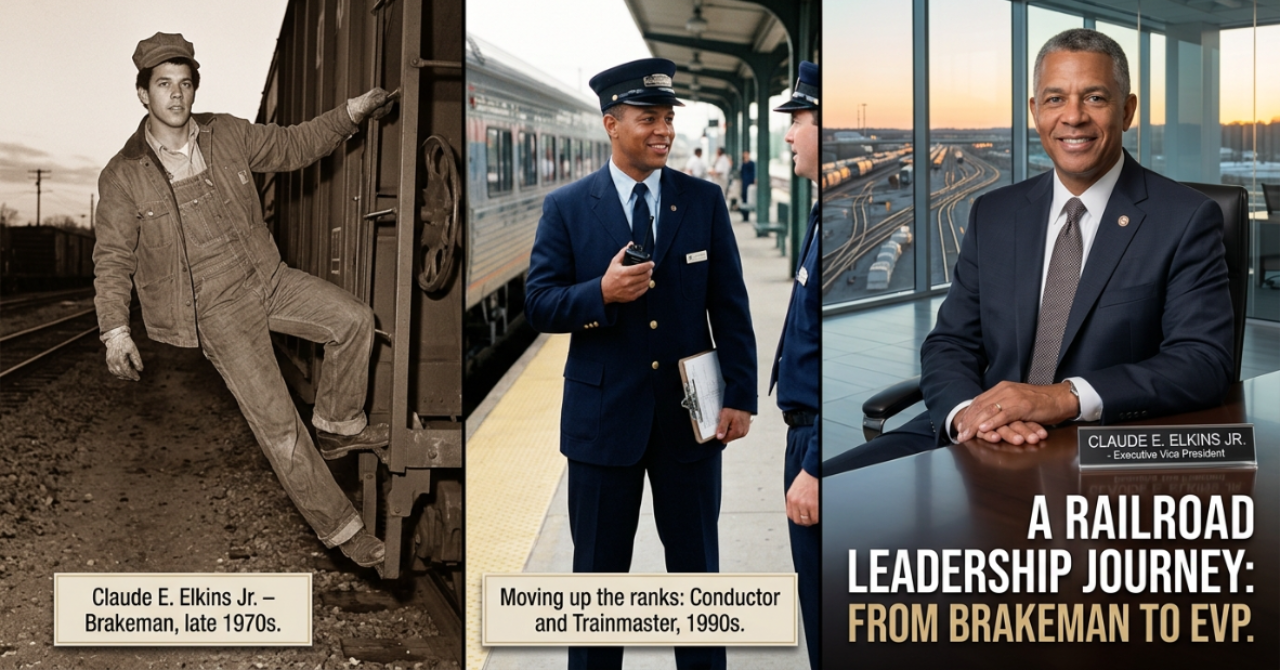
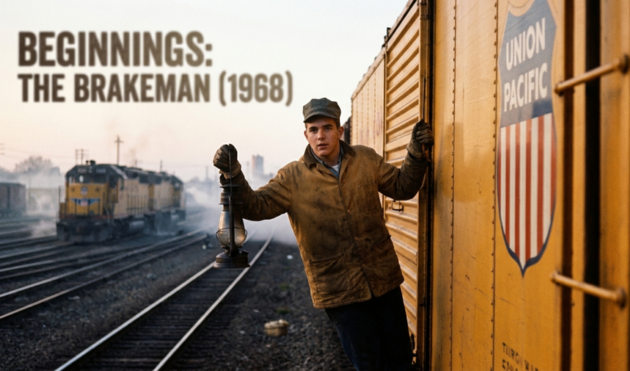
Claude Edward Elkins Jr. commenced his Norfolk Southern career in 1988 as a road brakeman—one of the most physically demanding and safety-critical positions within railroad operations. The brakeman role requires direct interaction with moving rail equipment, coupling and uncoupling cars, conducting air brake tests, and ensuring secure train consist configurations. This entry point provided Elkins with irreplaceable firsthand knowledge of railroad mechanics, Federal Railroad Administration safety protocols, and the physical realities faced by frontline transportation workers.
Progressing methodically through Norfolk Southern’s operational hierarchy, Elkins advanced to conductor—responsible for train movement coordination, crew communication, and freight documentation. He subsequently qualified as a locomotive engineer, mastering the technical operation of diesel-electric locomotives, fuel efficiency management, and terrain-specific handling techniques across diverse geographic territories. His advancement to relief yardmaster introduced supervisory responsibilities, requiring coordination of yard switching operations, crew scheduling, and freight car routing within classification facilities.
This fourteen-plus-year operational immersion provided Elkins with comprehensive understanding of Norfolk Southern’s physical network, terminal operations, crew management dynamics, and the intricate choreography required to maintain fluid freight movement across thousands of route miles. When he eventually transitioned into commercial leadership, this operational fluency became his decisive competitive advantage—enabling realistic strategic planning grounded in actual operational constraints rather than abstract theoretical models.
Strategic Transition to Marketing and Commercial Operations
The mid-2000s marked Elkins’s pivotal career transition from operations to commercial strategy—a shift that leveraged his operational credibility to transform Norfolk Southern’s market-facing business units. He assumed leadership responsibilities within intermodal marketing, the railroad’s fastest-growing segment connecting containerized ocean freight, domestic trucking, and rail transportation into seamless supply chain solutions.
Intermodal logistics represents the convergence of maritime commerce, highway trucking, and rail transportation—a sector requiring executives who comprehend both physical infrastructure limitations and customer service expectations. Elkins’s maritime economics education from Old Dominion University proved particularly valuable here, enabling sophisticated conversations with port authorities, steamship lines, and third-party logistics providers about capacity planning, transit time optimization, and pricing strategies.
During this period, Elkins developed expertise in customer-centric commercial strategy—transforming Norfolk Southern’s approach from commodity-based freight pricing to consultative supply chain partnership. He recognized that modern shippers required not merely transportation capacity but integrated logistics solutions encompassing inventory visibility, predictive analytics, and sustainability reporting. This commercial evolution positioned Norfolk Southern to capture premium market segments including automotive manufacturing, chemical processing, and e-commerce fulfillment.
Vice President Appointments and Expanding Responsibilities (2016–2020)
Norfolk Southern’s executive leadership recognized Elkins’s rare combination of operational authenticity and commercial sophistication through successive vice presidential promotions. In 2016, the company appointed him Vice President of Chemicals Marketing—a critical business unit serving the petrochemical, agricultural, and industrial manufacturing sectors. Chemical transportation requires specialized hazmat expertise, tank car logistics, and rigorous safety compliance that Elkins’s operational background uniquely qualified him to oversee.
By 2018, Elkins’s portfolio expanded to encompass Vice President of Industrial Products—responsible for steel, construction materials, paper products, and forest product transportation. This division serves foundational American industries where rail transportation provides decisive cost advantages over highway trucking for bulk commodity movement. Under his leadership, Norfolk Southern strengthened relationships with major industrial shippers while optimizing car utilization and network efficiency.
These vice presidential roles demanded sophisticated financial management, including P&L responsibility, capital investment justification, and market share defense against competing railroads and trucking companies. Elkins demonstrated particular aptitude for revenue management—balancing freight volume growth with yield optimization to maximize profitability without sacrificing long-term customer relationships.
Chief Commercial Officer Appointment and Current Executive Mandate (2021–Present)
In December 2021, Norfolk Southern elevated Claude Edward Elkins Jr. to Executive Vice President and Chief Commercial Officer—one of the corporation’s most influential strategic positions. This appointment consolidated oversight of intermodal services, automotive logistics, industrial products, chemicals marketing, and comprehensive sales operations under his executive direction.
As Chief Commercial Officer, Elkins shoulders responsibility for Norfolk Southern’s revenue generation strategy across approximately $11 billion in annual freight revenue. His mandate encompasses pricing strategy, customer relationship management, market development, service product innovation, and commercial team leadership spanning hundreds of sales professionals and account executives. He directly interfaces with Fortune 500 manufacturers, retailers, agricultural producers, and international shipping lines whose supply chain decisions impact national economic performance.
Elkins’s current role also requires navigating unprecedented industry challenges including precision scheduled railroading implementation, supply chain disruptions from global geopolitical events, sustainability mandates driving modal shift from truck to rail, and post-pandemic logistics network reconfigurations. His operational background proves invaluable in these strategic deliberations, ensuring that commercial promises align with physical network capabilities and workforce constraints.
| Year | Position | Key Responsibilities |
|---|---|---|
| 1988 | Road Brakeman | Freight car coupling, brake testing, train consist safety |
| Early 1990s | Conductor | Train movement coordination, crew communication, documentation |
| Mid-1990s | Locomotive Engineer | Diesel-electric locomotive operation, fuel management, terrain handling |
| Late 1990s | Relief Yardmaster | Yard switching supervision, crew scheduling, freight routing |
| Mid-2000s | Intermodal Marketing Leadership | Containerized freight strategy, port partnerships, supply chain solutions |
| 2016 | VP, Chemicals Marketing | Hazmat logistics, petrochemical transportation, safety compliance |
| 2018 | VP, Industrial Products | Steel, construction materials, paper products, forest products |
| 2021–Present | Executive VP & Chief Commercial Officer | Revenue strategy, all commercial divisions, customer relationships, pricing |
Leadership Philosophy and Executive Management Approach
Claude Edward Elkins Jr. embodies a distinctive leadership philosophy that industry observers characterize as “empathetic operationalism”—the integration of frontline workforce empathy with data-driven strategic decision-making. Unlike executives whose management frameworks derive exclusively from business school case studies, Elkins’s approach is fundamentally shaped by the physical labor, safety pressures, and team coordination requirements he personally experienced during fourteen years of railroad operations.
His management style prioritizes “walking the tracks”—regular visits to rail yards, intermodal terminals, and customer facilities that maintain his connection to ground-level operational realities. This practice serves dual purposes: it demonstrates executive respect for frontline employees while providing Elkins with unfiltered intelligence about network conditions, equipment performance, and customer service quality that sanitized corporate reports cannot replicate.
Elkins advocates for cross-functional collaboration between operations and commercial teams—a structural imperative that many railroads struggle to implement effectively. He recognizes that sales commitments made without operational validation create service failures, while operational decisions made without commercial input sacrifice revenue opportunities. His career trajectory spanning both domains enables him to architect organizational bridges that align commercial promises with operational capabilities.
Within Norfolk Southern’s corporate culture, Elkins champions continuous professional development—encouraging employees at all levels to pursue educational advancement similar to his own trajectory from brakeman to MBA graduate. He frequently emphasizes that the modern railroad industry demands intellectual versatility combining mechanical knowledge, digital literacy, financial acumen, and customer service orientation. His personal narrative provides compelling proof that educational investment yields executive career dividends regardless of starting position.
“True railroad leadership requires understanding not merely where the freight moves, but how the people moving it experience their work every day. Operational credibility isn’t inherited through title—it’s earned through shared experience.”
— Leadership philosophy attributed to Claude Edward Elkins Jr.
Executive Compensation and Financial Profile
As a senior executive at one of America’s largest Class I railroads, Claude Edward Elkins Jr. commands substantial compensation commensurate with his revenue generation responsibilities and industry expertise. Financial analysts and executive compensation researchers estimate his annual total compensation between $3 million and $4 million—encompassing base salary, performance-based bonuses, long-term incentive plans, and equity compensation through Norfolk Southern stock awards.
Industry compensation benchmarks for Chief Commercial Officers at Class I railroads typically range from $2.5 million to $5 million annually, depending on company size, revenue performance, and individual negotiation leverage. Elkins’s compensation positioning reflects both his extensive institutional knowledge—representing nearly four decades of Norfolk Southern experience—and his direct accountability for approximately half the company’s revenue streams.
Aggregating his executive earnings, investment portfolio, Norfolk Southern equity holdings, and pension accruals, financial estimates place Claude Edward Elkins Jr.’s net worth between $10 million and $20 million as of 2026. This valuation considers the appreciation of Norfolk Southern stock—a publicly traded equity with significant institutional ownership—and conservative assumptions about diversified investment allocation typical of senior executives approaching retirement eligibility.
Despite this financial success, Elkins maintains the modest lifestyle characteristics of his Southwest Virginia upbringing. He is not known for conspicuous consumption, luxury property accumulation, or high-profile social media presence. This financial discipline reinforces his authentic leadership brand—demonstrating that executive success need not correlate with personal ostentation. His private family orientation and community-focused resource allocation align with the values instilled during his Appalachian formative years.
Community Engagement and Industry Impact
Beyond Norfolk Southern’s corporate headquarters, Claude Edward Elkins Jr. extends his leadership influence through substantive community and industry organization involvement. He has served in leadership capacities with the Georgia Chamber of Commerce—reflecting Norfolk Southern’s significant operational presence in the Atlanta metropolitan area and Georgia’s status as a southeastern logistics hub connecting to the Port of Savannah.
His industry affiliations include engagement with the National Association of Manufacturers (NAM), where railroad commercial leaders collaborate with manufacturing executives on supply chain resilience, infrastructure investment priorities, and transportation policy advocacy. These relationships prove strategically valuable as Norfolk Southern seeks to align its network development with American manufacturing reshoring initiatives and industrial policy objectives.
Elkins has also contributed to organizations such as TTX Company—a railcar pooling cooperative serving North American railroads—and the East Lake Foundation, demonstrating commitment to community development beyond pure business networking. These affiliations reflect his belief that corporate executives bear responsibility for regional economic ecosystems that support their business operations.
Within the broader railroad industry, Elkins influences policy discussions regarding sustainability and environmental responsibility. Rail transportation offers decisive carbon emission advantages over highway trucking—moving one ton of freight approximately 470 miles per gallon of fuel compared to roughly 130 miles for trucks. As Chief Commercial Officer, Elkins positions Norfolk Southern’s sustainability advantages as competitive differentiators, helping corporate shippers achieve Scope 3 emission reduction targets through modal shift to rail.
Key Leadership Lessons from Claude Edward Elkins Jr.’s Career
The professional trajectory of Claude Edward Elkins Jr. offers actionable insights for aspiring leaders across industries, particularly within transportation, logistics, and industrial sectors where operational expertise remains paramount. His career exemplifies several transferable leadership principles:
1. Operational Credibility Creates Strategic Authority
Elkins’s ascent demonstrates that sustainable executive authority derives from demonstrated competence in an organization’s core value-creating activities. His brakeman-to-boardroom journey established irrefutable credibility with Norfolk Southern’s workforce, customers, and investors. Leaders seeking similar trajectories should prioritize deep functional expertise before pursuing general management roles.
2. Educational Investment Compounds Career Returns
Elkins’s simultaneous career advancement and academic progression—from BA to MBA to Harvard executive education—illustrates that formal learning amplifies experiential knowledge. His English degree developed communication capabilities essential for commercial leadership, while his maritime economics MBA provided technical fluency for intermodal strategy. Continuous education transforms operational workers into strategic thinkers.
3. Military Discipline Transfers to Corporate Excellence
His Marine Corps service provided leadership frameworks—mission clarity, team cohesion, accountability culture—that directly transfer to corporate environments. Veterans transitioning into civilian careers should recognize that military-developed traits including situational awareness, crisis management, and disciplined execution constitute genuine competitive advantages in industrial leadership.
4. Customer-Centricity Requires Operational Understanding
Elkins’s commercial leadership succeeds because his operational background enables realistic service commitments. Leaders in logistics and transportation must understand physical network constraints before promising customer solutions. The integration of operational knowledge with commercial strategy prevents the service failures that erode customer trust and market share.
5. Authenticity Outperforms Artifice in Industrial Cultures
Industrial workforces—railroaders, miners, manufacturers—possess acute authenticity detectors. Elkins’s genuine respect for frontline labor, demonstrated through his continued facility visits and operational engagement, generates organizational loyalty that no corporate communications campaign can manufacture. Authentic leadership in industrial sectors requires shared experience, not merely shared vision statements.
Frequently Asked Questions (FAQs)
Claude Edward Elkins Jr., also known as Ed Elkins, is an American railroad executive serving as Executive Vice President and Chief Commercial Officer at Norfolk Southern Corporation. He is renowned for rising from a road brakeman position in 1988 to senior executive leadership, combining operational expertise with commercial strategy development.
As Executive Vice President and Chief Commercial Officer, Elkins oversees Norfolk Southern’s commercial operations including intermodal services, automotive logistics, industrial products, chemicals marketing, and comprehensive sales strategy. He is responsible for revenue generation across multiple business segments and customer relationship management.
After serving in the United States Marine Corps, Elkins began his railroad career in 1988 as a road brakeman at Norfolk Southern. He progressively advanced through operational roles including conductor, locomotive engineer, and relief yardmaster before transitioning into marketing and executive positions.
Elkins earned a Bachelor of Arts in English from the University of Virginia’s College at Wise and an MBA in Port and Maritime Economics from Old Dominion University. He has also completed executive leadership programs at Harvard Business School.
As of 2026, Claude Edward Elkins Jr.’s estimated net worth ranges between $10 million and $20 million, based on executive compensation, stock holdings, bonuses, and long-term investment accumulation throughout his nearly four-decade career at Norfolk Southern.
Elkins practices “empathetic operationalism”—combining frontline workforce empathy with data-driven strategy. His fourteen years of railroad operations provide authentic credibility that distinguishes him from executives with purely academic or financial backgrounds. He emphasizes cross-functional collaboration between operations and commercial teams.
Yes, Elkins serves in leadership roles with the Georgia Chamber of Commerce and the National Association of Manufacturers. He has also contributed to TTX Company and the East Lake Foundation, reflecting commitment to both business development and community enrichment.
Key lessons include: operational credibility creates strategic authority; continuous education amplifies experience; military discipline transfers effectively to corporate environments; customer promises require operational understanding; and authentic leadership generates greater loyalty than manufactured executive presence.